
You’re sitting in traffic. Or in a meeting. Or standing in front of the open fridge at 9pm, not because you’re actually hungry, but because something inside you is screaming for relief.
Sound familiar?
That’s not a willpower problem. That’s not a discipline problem. And it’s definitely not a “you just need a better meal plan” problem.
That’s your nervous system running a very old program. A survival program. One that was designed to keep you alive in a world of predators and famines, not traffic jams and difficult coworkers.
And here’s what most people don’t know: as long as that program is running, your body will hold onto every ounce of fat it can. It’s not a bug. It’s the whole point. A body under threat hoards energy. That’s just biology doing its job.
The problem is, your body can’t tell the difference between a tiger chasing you and a stressful Monday. The signal is the same. And so is the response.
The good news? You can interrupt that signal. Right now. In 60 seconds. Without a gym, a supplement, or a meditation app.
It’s called Spinning the Spine. And once you understand why it works, you’ll never look at stress, or your weight, the same way again.
The Signal Behind the Struggle
Chronic stress triggers your body’s survival chemistry, cortisol spikes, fat-storage enzymes switch on, and cravings for quick energy intensify. This isn’t weakness. It’s your nervous system doing exactly what it was built to do. The Spinning the Spine technique works by interrupting this signal at the source, giving your body the one thing it needs before it can release weight: a sense of safety.
Why Your Body Is Holding Onto Fat (And It’s Not What You Think)
You’ve been doing everything right. Eating clean. Counting calories. Trying so hard.
And the scale still won’t move.
Here’s what nobody is telling you: you’re trying to solve a chemistry problem with willpower. And it will never work. Not because you’re weak. Because that’s not how the body operates.
When your nervous system perceives a threat, any threat, it launches a survival response. Cortisol floods your bloodstream. Adrenaline spikes. Insulin surges. Your body shifts into one singular priority: stay alive.
And here’s the part that changes everything.
Your body cannot tell the difference between a tiger chasing you through the jungle and a stressful email from your boss. Both flip the exact same switch. The same ancient, powerful, relentless survival program activates, whether the danger is real or imagined, physical or emotional.
Jon Gabriel calls these FAT Programs.
FAT stands for Famine And Temperature, the two primary survival threats your ancestors faced. When the body detects danger, it does what it was always designed to do: it holds on. It hoards. It upregulates the enzymes that store fat and down regulates the ones that burn it.
The FAT Programs can be triggered by:
- Chronic stress and emotional overwhelm
- Poor sleep and exhaustion
- Nutritional deficiencies and crash dieting
- Toxic relationships and emotional trauma
- Constant self-criticism and shame
Notice what’s not on that list? A single bad meal. A missed gym session. A piece of birthday cake.
Your body isn’t broken. It’s following orders.
The Science: Chronic cortisol elevation directly activates lipoprotein lipase, the enzyme responsible for pulling fat into your fat cells, while simultaneously suppressing hormone-sensitive lipase, the enzyme that releases fat to be burned. Stress doesn’t just feel bad. It physically reprograms your metabolism to store more and release less.
Think about the person who eats perfectly all day. Salad for lunch. Grilled chicken for dinner. No snacks. By 9pm, they’re standing in front of the freezer, spoon in the ice cream container, wondering what’s wrong with them.
Nothing is wrong with them.
Their nervous system ran on high alert all day, a difficult commute, back-to-back meetings, a tense conversation, a pile of unopened messages. By evening, the body demanded relief from a stress signal that had been screaming for hours. The ice cream wasn’t a character flaw. It was a nervous system event.
The FAT Program Loop
Stress activates survival chemistry → Cortisol spikes → Body upregulates fat storage → Cravings intensify for quick-energy foods → You eat → You feel shame → Shame creates more stress → The loop repeats. This is not a willpower failure. It is biology doing exactly what biology was built to do.
You cannot out-diet a nervous system in survival mode. No meal plan is powerful enough. No calorie deficit is deep enough. As long as your body believes it is under threat, it will hold on with everything it has.
The body only releases weight when it feels genuinely, chemically, neurologically safe.
That is the entire foundation of the Gabriel Method. Not another diet. A different signal entirely.
So what turns the signal off?
SMART Mode: Your Body’s Natural Fat-Burning State
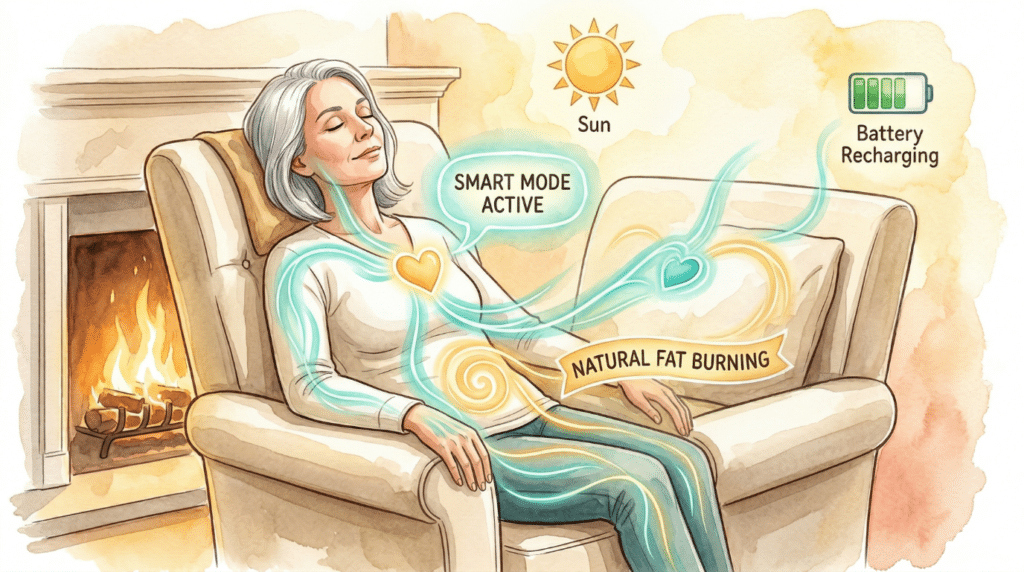
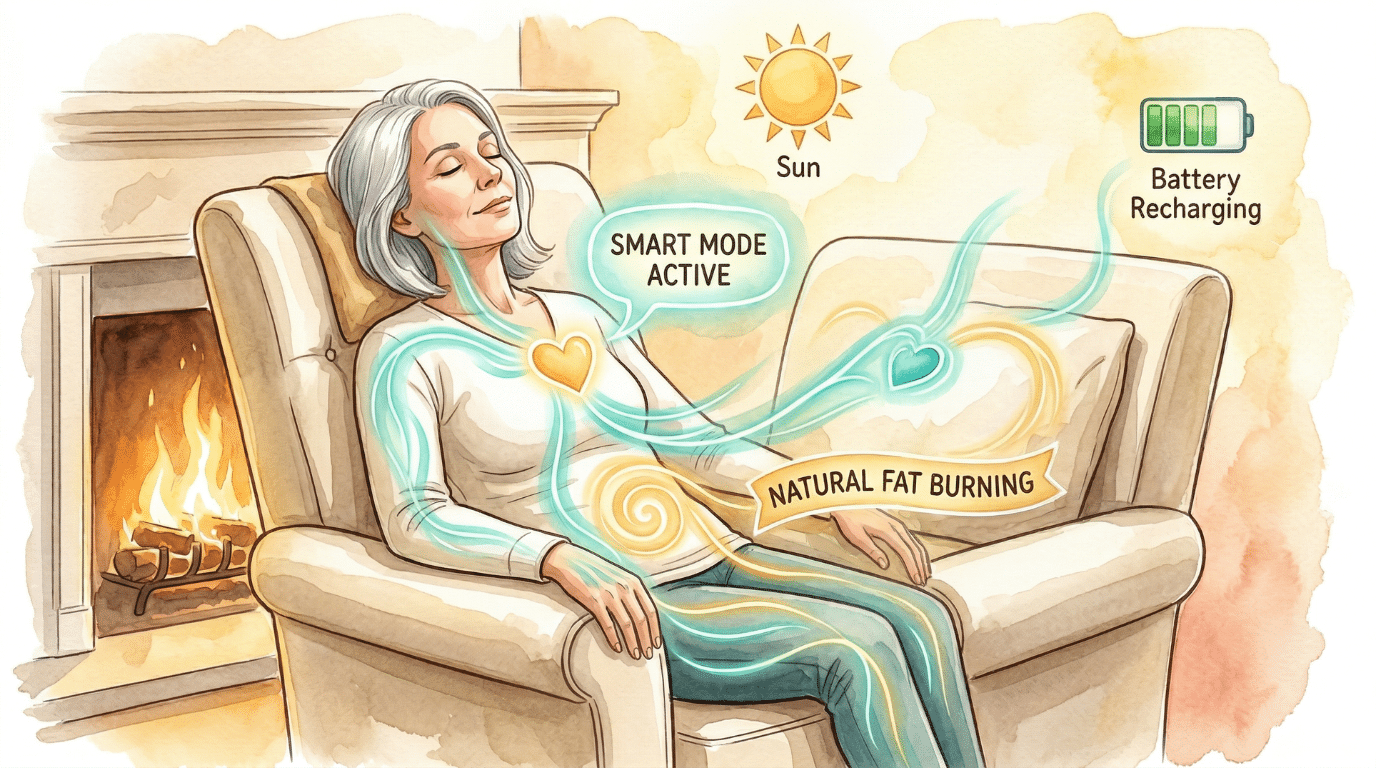
There’s a state your body already knows how to be in. A state where fat burning happens naturally, cravings lose their grip, and your metabolism hums along the way it was designed to.
Jon calls it SMART Mode. It stands for Super Mental Alert Reeducation Training. But don’t let the name fool you, this isn’t a mental exercise. It’s a physical one.
SMART Mode is not a mindset trick. It’s a metabolic state.
When your body enters SMART Mode, something very real happens at the chemistry level. Cortisol drops. Your parasympathetic nervous system (the “rest and digest” branch) takes the wheel. Your body stops interpreting every stressor as a survival threat and starts doing what it was always meant to do: burn energy, regulate hunger, and yes, release stored fat.
This is the opposite of fight-or-flight. And your body knows how to get there. It just needs the right signal.
Fight-or-Flight vs. SMART Mode: Two Very Different Bodies
Fight-or-Flight Mode (FAT Programs ON): Cortisol elevated. Insulin spiking. Body hoarding fat as emergency fuel. Cravings for sugar and processed food intensify. Digestion slows. Brain scans for threats.
SMART Mode (FAT Programs OFF): Cortisol normalized. Parasympathetic nervous system active. Body burning stored energy. Hunger signals accurate. Cravings quiet. Brain feels clear and calm.
Same person. Same body. Completely different chemistry, based entirely on which state you’re in.
Here’s what Jon discovered after years of failed diets: he was never in SMART Mode. Not even close.
Every diet attempt came loaded with stress, self-criticism, and a constant low-grade anxiety about whether he was doing it right. He was eating salads while running on adrenaline. His body heard one message, over and over: danger.
And a body in danger does not let go of fat. It holds on tighter.
The shift didn’t start with a new food plan. It started when Jon learned to signal safety to his nervous system, deliberately, repeatedly, until his body finally believed it.
When your body feels safe, it stops hoarding fat. It’s that simple.
The Science: When the parasympathetic nervous system is activated, the body reduces cortisol output, improves insulin sensitivity, and upregulates fat-oxidation pathways, meaning your body literally becomes more efficient at burning stored fat as fuel, not less.
This is why no amount of willpower gets you there. You can’t white-knuckle your way into SMART Mode. Forcing, restricting, and punishing yourself are all stress signals. They keep the FAT Programs running.
You can’t force your body into fat burning. But you can invite it.
Visualization, breath-work, and deliberate relaxation techniques are the tools Jon uses to extend time in SMART Mode. Done consistently, they change your baseline, your body’s default setting shifts from threat-detection to safety.
And one of the fastest ways to get there? A 60-second technique that works directly through your spine.
What Is the Spinning the Spine Technique?
Here’s the thing most stress-relief advice gets wrong. It tells you to sit still, close your eyes, and breathe. And while breathing helps, your body sometimes needs something more, a physical signal, not just a mental one.
That’s where Spinning the Spine comes in.
At its core, Spinning the Spine is a gentle, breath-coordinated spinal rotation. A slow, deliberate twist of your upper body, timed with your breath, that sends a direct message to your nervous system: stand down, we’re safe.
It takes about 60 seconds. And you can do it almost anywhere.
Parked in your car before walking into a difficult meeting. Sitting at your desk between emails. Standing in your kitchen at 9pm, hand hovering near the pantry. Even in a bathroom stall if that’s the only quiet space you’ve got. There’s no mat required. No special posture. No 20-minute window carved out of your day.
Your spine is a direct line to your nervous system. Use it.
Why the spine specifically? Because it’s not just a structural support column. Your spine houses your central nervous system. It’s the main highway your brain uses to communicate with your body and that communication runs in both directions. Which means you can use gentle spinal movement to send a signal back to your brain.
When you rotate the spine slowly and deliberately, you stimulate the vagus nerve, the body’s primary parasympathetic pathway. Think of the vagus nerve as the off-switch for fight-or-flight. When it activates, cortisol drops. Your heart rate steadies. Your digestion comes back online. Your body stops bracing for a threat that isn’t there.
And when you combine that rotation with conscious, slow breathing? The effect is faster and deeper than breath alone. Movement and breath together create a compound signal, like sending the same message through two channels at once.
The Science: Research on vagal tone, how well your vagus nerve responds to calming signals, shows a direct link to heart rate variability (HRV), which is one of the strongest measurable markers of metabolic health, stress resilience, and even long-term weight regulation. Higher vagal tone means your body can shift out of stress mode faster. Spinning the Spine is one way to train that response.
This isn’t about flexibility. It’s about chemistry.
Jon uses this technique in airports. Not because he has a fear of flying, but because airports are genuinely high-cortisol environments. The noise, the crowds, the fluorescent lighting, the processed food on every corner. Before he boards, he finds a quiet spot, sits down, and does a few slow spinal rotations with deep breaths. Not as a reaction to feeling terrible. As a preventive reset. He’s managing his nervous system proactively, before the stress accumulates into something harder to undo.
That’s the real shift in thinking here. Most people wait until they’re overwhelmed to try to calm down. By then, the cortisol is already flooding your system. The craving is already loud. The FAT Programs are already running at full volume.
Spinning the Spine works best when you use it early, as a regular signal to your body that safety is the default, not the exception.
This isn’t yoga. It isn’t chiropractic. It’s a deliberate communication to your body. A message sent through movement, breath, and intention.
60 seconds. Anywhere. No excuses.
Why the Vagus Nerve Changes Everything
The vagus nerve is the longest nerve in your body, running from your brainstem all the way through your chest and abdomen. When it’s activated, it signals your entire system to shift from survival mode into restoration mode, slowing your heart rate, lowering cortisol, improving digestion, and crucially, turning down the hormonal signals that tell your body to store fat. Gentle spinal rotation is one of the fastest physical ways to stimulate this nerve. That’s not a wellness trend. That’s basic neuroscience.
Want to dive deeper into this approach? Discover how to turn off your body’s fat-storage programs for good by joining me inside the 12-Week Total Transformation Program.