
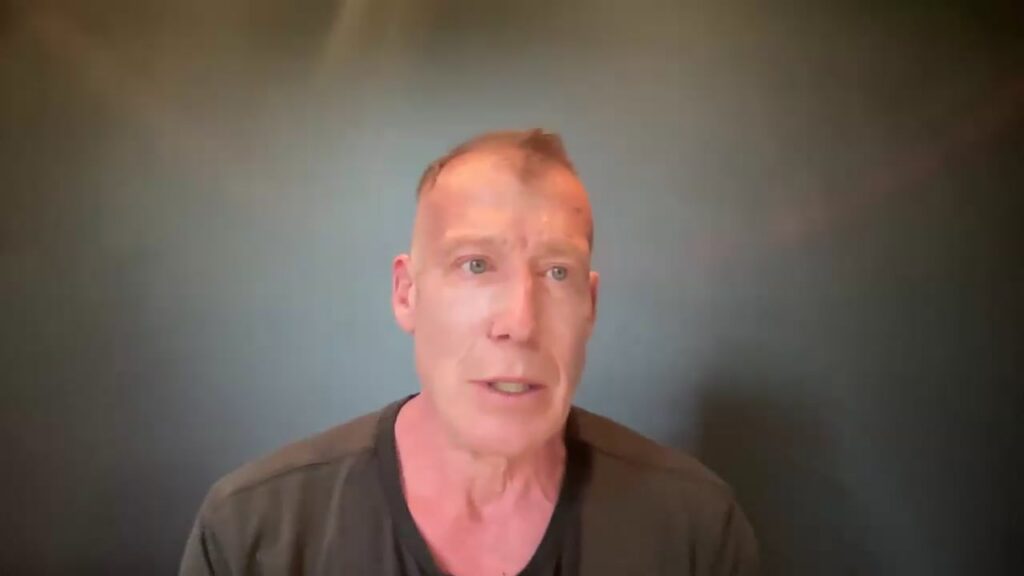
Want to watch the replay? Jump straight to the video.
I’ve waited 4 years to share this with you, because I wanted to make sure it was real first, and that it would actually last.
I went through this myself starting at 58, and I’ve spent the last few months walking a small group of coaching clients through the exact same process, watching them get the exact same results. And now I don’t want to wait anymore, because I honestly think this might be the most powerful message I have for the world right now.
So we did something we’ve never done before.
We got on a live Zoom, no slides, no script, just me and about 120 of you, live, on a Wednesday morning. My coach Melinda got on camera on day 8 of her very first detox. My assistant Marcus showed his face for the first time. And you all asked questions faster than we could get to them. Liana turned the recording into this recap, with timestamps, so if you weren’t there, or you want to go back and find the one part that matters most to you, you can jump straight to it.
Watch the live Zoom replay
Live Zoom Call With Jon Gabriel: How to get in the best shape of your life over 55
Use the chapter links below to read the recap.
[00:00] Why we did this live, not AI
I wanted to do it this way, as a Zoom, all of us together, because there’s so much AI right now. You could make an AI version of me and you honestly wouldn’t know the difference. That’s just the world we’re in. So I wanted something real. Something where you ask me something and I actually answer it, live, and you know it’s me, not a computer. That’s the whole reason for doing this, and honestly, it’s kind of the whole point of everything I’m about to tell you too.
What happened to me at 55
Okay, so here’s where it really starts. Many of you know I wrote the Gabriel Method back in 2005, 2006. And in the back of it there’s an appendix, “The Chemistry of the FAT Programs.” I studied biochemistry at the University of Pennsylvania back in the 80s, was actually thinking about becoming a doctor at one point, decided not to go that way, but I did a lot of biochemical research, a lot of organic chemistry. And in that appendix I wrote about inflammation and how it relates to weight, which nobody was really talking about back then. Everybody talks about it now. But there was a piece of it I still didn’t understand, and I didn’t understand it until I lived it myself.
I lost my weight at 40, and I was effortlessly thin, no effort at all, all the way until I turned 55. And then everything changed. I started gaining weight again, and I wasn’t doing anything differently. Nothing. So I started exercising more to try to fix it, and here’s the thing, the more I exercised, the hungrier I got, and the more weight I gained. Nothing worked. Nothing. That went on for about three years. And I’ll be honest with you, it was humbling. Here I am, the guy who wrote the book on effortless weight loss, gaining weight back with no explanation for it at all.
The detox, and what came after it
At 58 I got really sick. I went on a detox just to get my overall inflammation down so I could feel like a person again, I honestly wasn’t thinking about weight loss at all, I was just sick and I wanted to feel better. I lost weight fast, the way you always do on a detox. But more importantly, I got better fast, because the inflammation came down.
Now here’s what usually happens, and this is the part everybody knows: you come off the detox, and sooner or later you gain it back. But I felt so good, for the first time in years, that I didn’t want to lose that feeling. So I started playing around. Could I keep the benefits of the detox going while I was still nourishing myself?
I started making superfood smoothies. Super greens, frozen mangoes, frozen blueberries, added protein so I was getting everything I needed, but I was still kind of in this detox state the whole time. And I found I started craving these smoothies more and more, and eventually I turned them into ice creams, which is when I wrote the book Eat Ice Cream, Lose Weight. Because it turns out you can take superfoods and make them taste like a treat, and your body is still getting exactly what it needs.
My biological age came back in my 30s
Fast forward four years, I’m 62 now, and I’m in the best shape of my life. I did a biological age test recently, the Levine PhenoAge Calculator, which looks at your C-reactive protein, that’s an inflammatory marker. Most healthy people in their 60s come in around 5 or 6 on that marker. If you’re unhealthy, it’s closer to 10. Mine came back at 0.1. That’s about as low as that number goes.
So when you run the calculation, my biological age comes out in my 30s. And here’s the part that really gets me: it keeps getting younger every year instead of older. I feel better right now than I did when I was 19 years old, and I’m telling you all this because I think I stumbled onto something real, something that has everything to do with digestion and age.
[15:46] Meaghan, day 40
I want to give you a real example, not just me talking about myself. Meaghan is one of my coaching clients, and she sent me this text the day before we got on this call, day 40 of what she’s calling her “inside-out transformation.” I’m just going to read you some of it.
Higher spiritual attunement, consciousness, super focused. Higher empathy, compassion, a feeling of expansive love. Breathing, she put this in all caps, so much deeper, clearer, and wider. She said, I didn’t know breath could feel like this. Eyes so much brighter. Skin, hair, nails better, growing faster. She’s a singer, and she says she’s singing more powerfully than she ever has.
And then the physical numbers. 30 pounds down in 40 days. Blood pressure went from 130 over 93 to 103 over 79. Heart rate went from 60 down to 48. She used to take 2 to 4 Advil every single day for a meniscus tear from back in April that wasn’t healing at all, probably needed surgery. Now she’s almost fully healed, no surgery, and she takes zero Advil. I’ve heard this kind of thing before too, old knee problems just clearing up once the inflammation comes down enough. It’s the same thing I went through, just happening in someone else’s body now.
[18:08] Why this eventually gets everybody
Here’s what I’ve learned, and I’m honestly still learning it. Whether or not you’ve ever had a weight problem in your life, our digestion becomes impaired as we get older. I just found out that sometime in your 50s, most people lose about 32% of the neurons in their intestines, the ones that move food through your system. So digestion slows way down.
And when digestion slows down, food sits there longer, and there’s a putrefaction that happens, and that’s inflammatory. That inflammation changes your gut microbiome, and it causes leaky gut, which means undigested particles start getting into your bloodstream, which causes more inflammation. And that inflammation is what drives insulin and leptin resistance, which is what makes your body hold onto weight in the first place.
I think about this every time I see an old Chevy Chase movie. I used to love the guy, Fletch, Spies Like Us, Vacation, the Weekend Update on Saturday Night Live back in the day. And he was always tall and effortlessly thin. Didn’t seem like an exercise fanatic or anything, he was just thin. And then I saw him years later in one of the later Vacation movies, playing the older dad, and he was heavy. Puffed out. And you have to ask yourself, did he suddenly start eating more? Did he suddenly stop exercising? Probably not. Something else changed. And for most of us, that something is digestion.
[23:00] The one thing to write down
If you take one thing from this whole call, write this down, because this is almost like an equation. You want foods that are the most nutritionally dense, that require the least amount of digestion, and that are the least processed and the least toxic. Anything processed is built to have a long shelf life, which means it’s built to resist breaking down, and that means it’s going to resist breaking down in you too. So nutrient-dense, low-digestion, low-toxin. For me, for a long time, that mostly meant liquid.
Nutrient-dense. Low-digestion. Low-toxin.
[24:49] Digestive quiescence, and the German study
Here’s something that’s almost miraculous, if you do a detox the right way. By about day three or four, you’re just not hungry anymore. I found this out myself doing a detox back in 2004, and then I saw it over and over again working with clients, we used to do it as a group, five days at a time. Usually by day three or four people would say, wow, I’m not hungry, I feel amazing, can I keep going? And I’d always say no, because we were doing it as a group and I couldn’t support everybody after it ended.
And it’s not just me and my clients. There was a study at a detox retreat in Germany, they tested about 1,400 people going through a fast. After four days, 93% of them said the hunger was just gone. Completely, totally gone, not the kind of gone where you’re still thinking about food. Your digestion basically shuts down, you stop producing as much ghrelin, that’s the hunger hormone.
The part almost nobody figures out is what happens after. Most people just go back to eating however they were eating before, and they end up right back where they started. What I discovered is you can keep your body in that same state, low digestion, low inflammation, they call it digestive quiescence, while you’re still nourishing yourself, as long as what you’re eating asks almost nothing of your digestion. You stay nourished, you stay out of the inflammation cycle, and honestly, you can keep it going for as long as you want. I’ve been doing some version of this for four years now.
[34:14] Melinda, day 8, biologically 11 years younger
I brought Melinda onto the call because she’s one of my coaches, she’s 60 years old, and she’s currently eight days into her very first detox, something she’d never done before in her life. She’s already testing biologically 11 years younger.
Melinda has always been really transparent with this community that she’s had a tough relationship with food in the past, tumultuous is the word she uses, she was even hospitalized at one point for disordered eating. She told us she had a lot of anxiety leading into starting this. And then, as soon as she started, it just calmed down. Her words were, oh, this is what it is, oh, I can do this.
Around day three she started noticing extra energy she couldn’t explain. She said she’s more emotionally regulated, less overwhelmed by lights and sounds and smells than she normally is, more motivated, and she’s noticed she’s not procrastinating as much either. She wasn’t hungry, which surprised her, because that was the thing she was most scared of going in.
What she said mattered most, more than any of the food stuff, was having someone in her corner. Knowing the actual stages her body was moving through, hour by hour, 12, 20, 24, 48, 72, so the discomfort had a reason attached to it instead of just being scary and random.
[41:07] How I actually work with people one-on-one
This is the part I really wanted you all to understand. What I’m doing with clients now is completely one-on-one, mostly over WhatsApp. Somebody will send me a voice message, hey, today I felt really good, I’m ready for the next step, what’s next. And I’ll send one back, okay, let’s introduce the super greens, or let’s add a smoothie, let’s up the protein a little, let’s go for a walk, whatever the next right step is, we just take it together, day by day.
That’s the piece that was always missing from the old group detoxes. We used to run them for 300 people at a time, all together, start on a Monday, finish on a Friday. And by Wednesday or Thursday everybody’s saying, I feel amazing, can I keep going? And we’d have to say no, because once the group program ended, there was nobody there to support you individually anymore.
Now there is. I’m taking about 10 clients a month this way, walking each of them through exactly what I went through myself, for as long as they need. I can’t take everybody, obviously, there’s only one of me, which is part of why I wanted to walk Melinda and Brian through this too, so they can start helping guide people through the detox part as well.
[48:36] Autophagy, “zombie cells,” and telling a symptom from a problem
One thing Melinda said that stuck with me, understanding the actual physiological stages made this feel motivating instead of scary. Knowing you’re heading toward autophagy, where your body starts eating up all these old, dead cells, they call them zombie cells, cells that have died but haven’t been reabsorbed, and they just sit there pumping out inflammation, gave her something to look forward to instead of just something to grit her teeth and get through.
It also helps to know the difference between a detox symptom and an actual problem. Feeling a little foggy, a little achy, maybe a bit dizzy standing up too fast, that’s usually just low blood pressure, pretty normal when you’re detoxing. And then you get through it, and there’s this surge of clarity and calm on the other side. The whole point of what I’m building here is a way to keep that feeling going, instead of watching it disappear five days later the way it always used to.
[51:48] Locks on the fridge to this
I should tell you, I’ve been on every side of this. I had a lock and chain on the refrigerator growing up, plus a lock on the pantry. I was sent to what they used to call fat camp, not politically correct to say that anymore, but that’s what it was called. I was put on every diet you can name. And then I wrote the Gabriel Method and was effortlessly healthy for 15 years. I’ve lived pretty much the whole spectrum of this.
At 62, staying healthy has never been easier for me. I eat as much as I want, whenever I want, it’s just that what I want has changed, I’ve mutated, I’ve evolved. I never feel like I’m on a diet, I never weigh myself. And here’s almost a dirty little secret, I barely exercise. Some months I go without any exercise at all. When I do, it’s maybe 5 or 10 minutes of at-home strength training with bands, and I get results fast, because my inflammation is so low that my body can actually produce the hormones it needs to build muscle. When your inflammation is high, those reparative hormones, testosterone, growth hormone, they just don’t get made the way they should, which is a big part of why it gets so hard to build muscle as we age.
[54:58] Where to start
If you want to start on your own, my book, Eat Ice Cream, Lose Weight, is a great place, you can get it on Amazon. There’s also the free members area, just go to thegabrielmethod.com/icecream, there’s about 15 recipe videos in there walking you through the smoothies and the ice creams. And we’ve got the 12-Week Total Transformation, Ice Cream Edition, weeks 10 and 11 walk you through a detox, then bringing the superfood ice creams back in.
And if you’re at a point in your life, maybe 55 or older, maybe you’ve got a little more room right now, fewer kids running around, fewer work commitments, and you feel like there’s nothing more important right now than getting your health and your vitality back, and you want to work with me directly, one-on-one, that’s a different conversation. I think this is close to a once-in-a-lifetime opportunity to get years of your life back. Reach out to Marcus, he’s at vip@thegabrielmethod.com, and don’t forget the “the” in there, tell him you were on the Zoom call and he’ll take it from there.
[57:39] Your questions
How is this different from the old Gabriel Method Detox?
A lot of you wanted to know how this is different from the old Gabriel Method Detox. The biggest thing is I don’t use juices nearly as much anymore, there’s a lot of sugar in fruit and vegetable juice, and without the fiber it hits your bloodstream too fast. Now it’s mostly vegetable broths and super greens, added in slowly, and it’s not locked into five days anymore either. People are doing this for 35, 40, even 60 days at a stretch, staying nourished the whole way through.
Is the coaching only for people over 55?
Casey asked, she’s 47, wants to lose 95 pounds, tried one GLP-1 shot and never wants to touch another one, lost 12 pounds and has plateaued, will this work for her. Yes, 100%. I focus a lot on people who are older because these inflammatory and digestive issues get worse with age, but they’re not exclusive to it. What matters more than your age is whether you can actually make this a priority for a stretch of time.
Why do different diets work for different people?
Mirela asked why some people stay effortlessly thin without ever changing anything. A lot of it is genetics. One example, 40 to 50% of people carry a gene mutation called MTHFR, which causes problems if you’re eating too much animal protein, and if you don’t know about it, you end up with more inflammation, not less. It’s a big part of why one diet works beautifully for someone and does absolutely nothing for the next person. What I’m doing works underneath all of that, because it’s about healing the gut and lowering inflammation, and that’s a foundation everybody needs, no matter what diet you land on after.
What did Jon say about menopause and getting older?
Somebody asked about menopause. Men go through a version of this too, their hormones decline, that causes more stress and inflammation, and both men and women lose 32 to 37% of their gut neurons around this age, so digestion slows for everybody. This works the same way for both. About 95% of my clients happen to be women, and it’s worked well for the men in their lives too, Liana’s husband did this and got great results.
What does “not activating your digestion” mean?
Stephanie asked what I actually mean by "not activating your digestion." That’s the digestive quiescence concept. On a detox, your ghrelin production drops and your whole system slows way down. You don’t stay fully shut down forever, but going forward, you keep asking as little of your digestion as possible, and that’s what keeps hunger down and inflammation down.
What did Jon say about protein and digestion?
Deborah pointed out protein takes a lot of digestion, and asked if that’s a problem. It can be, so the goal is getting it in the most bioavailable form you can. Nutritional yeast is about 50% protein and really easy to digest. Sprouted, activated nuts and seeds in a powdered form go down a lot easier than, say, an overcooked burger on a bun, where the meat’s already hard to break down, the bread’s neutralizing what little stomach acid you’ve got, and you’re trying to process a big chunk of food all at once.
How does this differ from OMAD or alternate-day fasting?
Paula’s been doing OMAD or alternate day fasting for five years and it’s stopped working for her, gains two kilos a week if she eats two meals a day, would this help. This isn’t the same mechanism as that kind of fasting, which can actually have a rebound effect and often isn’t sustainable long term. This is about nourishing your body at a cellular level, not restricting it.
How does Jon handle food in social situations?
Somebody asked how I handle food being such a social thing. I made peace a long time ago with just owning my weirdness. I bring my own smoothies to dinners, barbecues, even my own wedding, at Lake Tahoe, smoothies right there in the middle of the table where everybody could see them. People notice, they ask questions, and most of the time they end up more curious than judgmental about the whole thing.
What did Jon say about a history of binge eating?
Bonnie has a history of binge eating and said she’s scared restriction will make it worse. This is exactly why I build everything around nourishment and not restriction. Melinda spoke to this directly from her own experience, as her body actually got what it needed, that old fear of hunger, and the binge triggers that came with it, started to loosen up on their own.
What did Jon say about diabetes?
And a few of you asked about diabetes. For type 1, always work with your doctor, I do that with clients directly, only ever with a doctor’s blessing. Type 2 is different, this doesn’t spike your blood sugar, because the fruit sugar involved stays in a blended form with the fiber still intact, so it moves slowly and actually feeds your healthy gut bacteria instead of flooding your bloodstream. And because it lowers inflammation, it can help address the insulin resistance that’s driving the type 2 in the first place.
[1:22:45] What’s next
We’re going to keep doing more of these live calls, so keep an eye on your inbox. And Marcus, if you’ve talked to him, you already know he’s a real person, he got on camera at the end of this call and everything. Somebody on the call put it perfectly, they said he’s the Ted Lasso of health. Honestly, that’s the whole point of everything we’re building here. Real connection, one person at a time.
About Jon Gabriel
Jon Gabriel lost more than 220 pounds without dieting, pills or surgery, and has kept it off for over 20 years. He holds a bachelor of science in economics from the Wharton School at the University of Pennsylvania, where he also completed extensive coursework in biochemistry and performed research for the biochemist Dr. Jose Rabinowitz.
He is the author of The Gabriel Method, an international bestseller translated into 16 languages and sold in 60 countries, along with Visualization for Weight Loss, Fit Kids Revolution and Eat Ice Cream Lose Weight. He has been featured in the documentaries Hungry for Change and Transcendence.
Adapted from Jon Gabriel’s live Zoom call, “How to get in the best shape of your life over 55.” Recap prepared by Liana.