

You just ate a huge meal. You’re physically stuffed. Your stomach is stretched.
Two hours later, you’re ravenous again.
Hunting through the kitchen like you haven’t eaten in days. Your body is screaming for food even though you’re carrying months worth of stored energy as fat.
What is wrong with you?
Nothing.
Your hunger hormone is broken. And once you understand why, everything changes
Meet Leptin: Your Body’s Weight Control Boss
Deep inside your fat cells, there’s a hormone called leptin. Think of it as your body’s weight control center.
When leptin is working properly, it:
- Tells your brain when you’ve had enough food
- Keeps your metabolism running fast
- Makes you crave healthy foods
- Turns your body into a fat-burning machine
Leptin is literally designed to keep you thin.
But here’s the problem: Most overweight people have TONS of leptin floating around their bloodstream. Way more than thin people.
So why are they still heavy?
The Cruel Leptin Trap
When Jon Gabriel discovered leptin research, he thought he’d found the answer to obesity. Scientists were calling it the “miracle weight loss hormone.”
But there was a catch.
When researchers gave leptin to overweight people, nothing happened. They didn’t lose weight. They weren’t less hungry.
It was like their bodies couldn’t hear the leptin screaming at them.
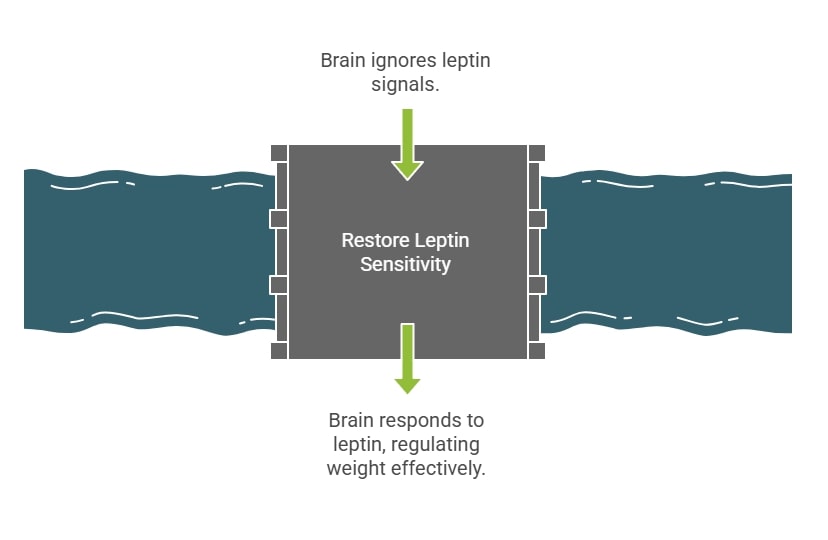
Scientists discovered that most overweight people aren’t leptin deficient – they’re leptin resistant.
What Leptin Resistance Really Means
Imagine leptin as your body’s fire alarm. When working properly, it alerts you to “danger” (overeating) so you can take action (stop eating).
But in leptin resistance, it’s like the alarm is blaring at full volume… and you can’t hear it.
Your fat cells are pumping out leptin, desperately trying to tell your brain: “We have enough stored energy! Stop eating! Speed up the metabolism!”
But your brain isn’t listening.
So it thinks you’re starving.
Result: You stay hungry, crave junk food, feel tired, and store every extra calorie as fat.
Even if you’re carrying 50+ pounds of stored energy on your body.
The Set-Point Prison
This is why your body has what feels like a “set point” – a weight it always returns to no matter what you do.
When leptin resistance sets in, your brain essentially resets your internal thermostat. Instead of maintaining a healthy weight, it now thinks you NEED to be heavier to survive.
It’s like your brain’s weight control center got hacked.
So every time you try to lose weight below this new “set point,” your body panics:
- Metabolism slows down by up to 40%
- Hunger increases dramatically
- Cravings for high-calorie foods intensify
- Energy levels plummet
Your body literally fights to get you back to its new, higher set point.
What Breaks Leptin Sensitivity
Jon discovered that certain modern stresses trick your body into becoming leptin resistant:
Chronic Dieting: Every time you restrict calories, you’re telling your body food is scarce. This triggers leptin resistance as a survival mechanism.
Processed Foods: Artificial ingredients disrupt the delicate hormonal signals between your gut and brain.
Chronic Stress: Elevated cortisol levels directly interfere with leptin signaling.
Poor Sleep: Just one night of bad sleep can increase leptin resistance by 30%.
Inflammation: Toxins and inflammatory foods create “static” that blocks leptin signals.
Emotional Trauma: Your brain interprets emotional threats as physical threats, activating ancient survival programs.
Sound familiar? These are exactly the stresses of modern life.
The Thin Person’s Secret Weapon
Naturally thin people aren’t special. They just have sensitive leptin receptors.
When they eat enough food, their brain hears the leptin loud and clear: “Stop eating. Speed up metabolism. Burn stored fat.”
So they naturally:
- Feel satisfied with smaller portions
- Rarely think about food between meals
- Have steady energy all day
- Burn calories efficiently
They’re not more disciplined. Their hormone signals just work properly.
Amanda’s Leptin Miracle
In Jon’s book, The Gabriel Method, he shares Amanda’s story. At 69 years old, she lost 113 pounds in six months using The Gabriel Method.
But the real miracle wasn’t the weight loss. Her blood sugar levels dropped from a life-threatening 17-19 down to a healthy 5-7.
Her doctor said she still had diabetes, but Amanda knew better: “I don’t think I do.”
Her leptin sensitivity had been restored.
Her body remembered how to regulate itself properly.
What to Expect
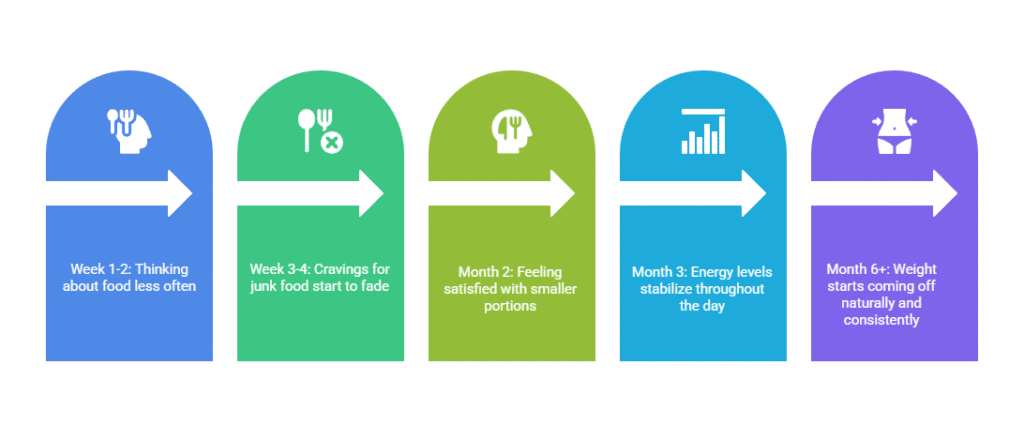
When your leptin sensitivity improves, you’ll notice:
- Week 1-2: You think about food less often
- Week 3-4: Cravings for junk food start to fade
- Month 2: You feel satisfied with smaller portions
- Month 3: Energy levels stabilize throughout the day
- Month 6+: Weight starts coming off naturally and consistently
This isn’t willpower.
It’s your body’s natural weight control system coming back online.