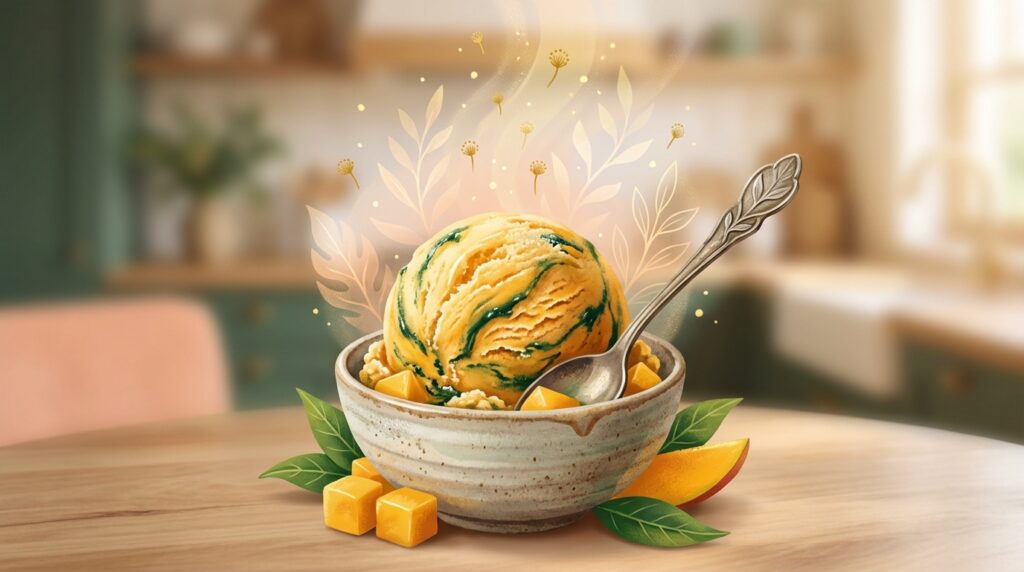
The point of the first batch is to make something you would want to make again.
You hear “superfood ice cream” and picture a counter covered in powders, a machine you don’t own, and a recipe that tastes suspiciously green.
I understand the hesitation. If the first batch is difficult or tastes like a project, why would you make a second?
Jon Gabriel’s starter method is much simpler than that picture. In his Eat Ice Cream, Lose Weight materials, he begins with frozen mango, a vanilla superfood blend, unflavored protein powder, and cold water. You blend it thick and taste it. No ice cream machine is required for the first try.
The real aim is to make something creamy and delicious enough that you want to make it again.
Start with Jon’s simple base
For the starter version in the Gabriel Method ice cream workbook, Jon uses about 500 grams of frozen mango, one scoop of the vanilla superfood blend he specifies, one scoop of unflavored protein powder, and cold water. He suggests optional sweetener only after tasting.
That is the recipe to consult if you want to make his exact version. Different blends have different ingredients and scoop sizes, so check the product and the book rather than guessing from a social media clip. If you have allergies, a medical diet, or concerns about supplements, ask a qualified professional before trying unfamiliar ingredients.
The mango is doing more than providing sweetness. It makes the mixture thick and cold. The other ingredients are Jon’s way of adding the nourishment he wants in the ice cream. I won’t claim that a blender turns any combination of ingredients into a medical treatment. This is a recipe, and a way to explore his approach.
The first batch, step by step
Set out the ingredients and a blender. Put the frozen mango in first. Add the vanilla superfood blend and unflavored protein powder. Pour in cold water slowly, stopping just below the level of the fruit. Jon’s workbook emphasizes that you can add more water, but you cannot easily take it back out.
Blend until the mixture is smooth and thick. If the blender stalls, stop it, stir safely, add a small splash of water, and try again. Do not reach into a running blender.
Now look at the texture before you change the sweetness. Is it something you can eat with a spoon? If it pours like a drink, add a little more frozen mango and blend again. If it is too thick to move, add a little water at a time.
Taste it. Only then decide whether you want more sweetness. Jon’s directions make tasting part of the process, which is refreshingly practical. You are making something for your own mouth, not trying to pass a recipe exam.
Jon’s order of operations
- Build the frozen mango base.
- Add the specified superfood blend and protein.
- Use less water than you think you need.
- Fix texture first.
- Taste before deciding on sweetness.
This order is useful because it gives you one problem to solve at a time.
Why texture matters so much
Imagine taking a spoonful and finding that it feels like a smoothie. The flavor may be good, but it isn’t the ice cream you expected. That disappointment can make you assume the whole idea doesn’t work for you.
Jon pays close attention to texture for a reason. The frosty version is thick enough to feel like a frozen dessert. Too much liquid changes the experience. The book also describes other ways to freeze the mixture, but you don’t need to begin there.
When someone asks me what to change first, I would say follow Jon’s water guidance closely. Then taste. It is easier to adjust a good base than to rescue a thin mixture with extra sweetness.
If your blender struggles with frozen fruit, let the fruit sit for a few minutes or work in smaller amounts, following the manufacturer’s guidance. You can still learn the method without buying a new machine.
Make it enjoyable, not merely impressive
It is tempting to load the first batch with every ingredient you have heard Jon mention. I would resist that. Begin with the starter recipe as written. Taste what it is supposed to taste like before you customize it.
Maybe you love the mango version. Maybe you prefer one of Jon’s chocolate variations. The book discusses different bases, mix-ins, and textures. You can explore later. The first batch only needs to answer one question: “Would I be happy to eat this again?”
That question keeps pleasure in the conversation. Jon’s larger idea is that nourishing choices become easier when they are enjoyable. If a recipe feels like a chore, it may be the wrong recipe for you, or it may need a different texture or flavor.
Please don’t force yourself to love a version because someone else does. Taste is personal, and a sustainable routine has to take your own preferences seriously.
What about sweeteners?
Jon’s starter instructions include an optional sweetener. Optional is the word I want you to notice. Taste the finished base first. Frozen fruit and the blend may already be sweet enough for you.
If you want more sweetness, follow the guidance in his recipe and add a little at a time. Taste again. There is no need to turn your first batch into a debate over what you “should” prefer.
The book discusses sweeteners in more detail. If you have a health condition that affects your choices, follow your healthcare team’s advice. The goal here is a good first attempt, not a universal rule for every reader.
When the first attempt goes wrong
Most first-batch problems are ordinary kitchen problems. Too thin? Try more frozen fruit next time, or less water. Too thick? Add a small splash of water and blend again. Didn’t enjoy the flavor? Recheck the exact blend and recipe you used before concluding that all of Jon’s variations will taste the same.
A stalled blender is not a sign that you did something foolish. A thick frozen mixture can be hard for a machine to move. Stop, stir safely, and adjust slowly.
If the result tastes good but you are not keen to make it again, think about convenience. Could you keep the ingredients ready? Could you make a smaller batch? Would a different method fit your kitchen better? The routine matters as much as the first taste.
And if you simply dislike it, that’s an honest answer. Jon offers other recipes. You do not need to eat a disappointing batch because it has a wellness label.
Keep the first attempt low pressure
Set aside a time when you can taste and adjust the batch without rushing. Read Jon’s instructions once before you start, and make sure the frozen fruit isn’t one solid block. If you are sharing the result, let everyone taste it without announcing a health claim.
A first batch is allowed to be imperfect. The useful outcome is learning how your blender handles the mixture, which texture you enjoy, and whether the flavor is something you’d choose again. That makes the next batch easier.
A second batch worth making
If you liked the first version, make the same one again before changing five things. The second batch tells you whether you can repeat it and how it fits into your week.
Perhaps you learn that the mango needs to sit out for a few minutes so your blender can handle it. Perhaps you want it a little thicker. Perhaps you find the sweetness just right as written. Small adjustments make the recipe yours without losing what Jon intended.
Then, when you’re ready, open the book and choose a variation that sounds genuinely appealing. Follow the directions. Taste. Enjoy the experiment.
Keep the recipe recognizably Jon’s
Once you make a starter batch, you may see dozens of online variations described as “Gabriel Method ice cream.” Some may be delicious. They are not necessarily the recipe Jon teaches.
If you want to understand his method, follow one published version first. Note the blend, the frozen base, the amount of water, and how the finished texture feels. Then change one element at a time. You will know what you liked about the original and what your adjustment actually did.
This also matters when someone has an allergy or a medical diet. A substitute may change more than flavor. Check labels and ask a qualified professional if an ingredient is new to you. You can enjoy experimenting without assuming every swap has the same nutritional profile.
You don’t need to make your kitchen into a laboratory. Just give the first recipe a fair try before turning it into something else.
Frequently asked questions
Do I need a Ninja CREAMi or an ice cream maker?
No. Jon’s starter method produces a thick frosty in a blender. His materials describe other freezing methods if you want a different texture later.
Can I replace the superfood blend with any green powder?
I wouldn’t assume the results will be the same. The flavor and ingredients vary widely, and Jon is specific about the blend he uses. Check his recipe and the product label, especially if you have allergies or sensitivities.
Why does the recipe include protein powder?
It is part of Jon’s starter formula and contributes to the texture he is aiming for. Choose a product that is suitable for you and your health needs. If you are unsure about supplements, ask a qualified professional.
What if my blender won’t move the frozen mango?
Stop it, stir safely, and add a small amount of water. Work slowly. Follow the blender maker’s instructions, and never put a hand or utensil into a running machine.
Why should I taste it before freezing?
Cold can change how sweet something tastes. Jon’s workbook advises tasting the mixture before you freeze it further, so you can make a small adjustment while it is still easy.
Do I have to make the vanilla mango version forever?
No. It is a forgiving place to start. Jon’s book includes other bases and flavor directions. Make the first version once or twice, then explore what you enjoy.
Will making this ice cream cause me to lose weight?
No recipe can promise that. Jon presents superfood ice cream as part of his approach to nourishment. Weight is shaped by many factors, including health conditions. Let the first batch be a food you enjoy, not a test of your body.
This article is educational and isn’t medical advice. Check ingredients for allergens, and consult a qualified health professional about medical diets or supplements.